Media kit
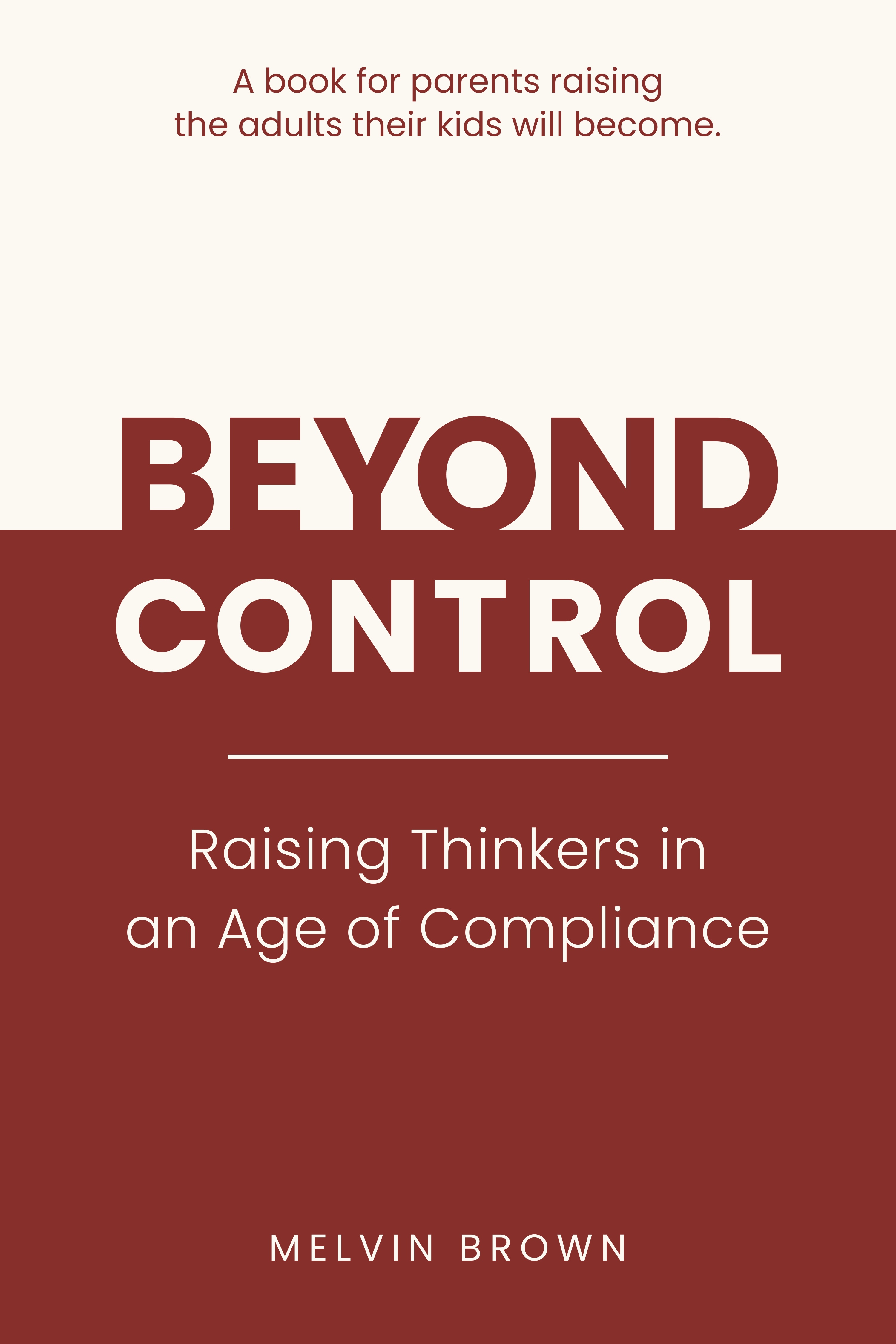
Beyond Control
Raising Thinkers in an Age of Compliance
A book for parents raising the adults their kids will become
by Melvin Brown · February 1, 2027 · Cordelyn
The book
A philosophical framework for developmental parenting, built as four foundation principles and four implementation insights for raising capability instead of enforcing compliance.
Hardcover 979-8-952088-01-6 · Paperback 979-8-952088-00-9 · Ebook 979-8-952088-02-3 · 208 pages · 6 × 9 in
The conversation
The world children are entering rewards judgment, adaptation, and independent thinking, and punishes mere rule-following. Yet the parenting patterns most of us run were never designed for that world. They were inherited from institutions built around compliance: raise your hand, wait for the bell, earn the sticker, because I said so. Parents never chose these responses; they absorbed them. And nobody stops to ask what those responses were actually designed to produce, or whether that's what they want their child to become.
When his younger daughter wanted to make a book, his first plan was the easy default: paper and crayons. Instead, he stopped and asked her a question. Her answer sent him down the long road of learning to publish, and that became Cordelyn, an independent press. Cordelyn exists because of one question, and that question opened the door to the one behind Beyond Control, a book for parents raising the adults their kids will become. Beyond Control: Raising Thinkers in an Age of Compliance is out February 1, 2027, from Cordelyn.
About the author

Melvin Brown is a U.S. Navy veteran and a former Fire Controlman. He runs Cordelyn, an independent press. The press began with a question: when his younger daughter wanted to make a book, he asked her one before reaching for paper and crayons. He is the author of Beyond Control: Raising Thinkers in an Age of Compliance (Cordelyn, February 1, 2027).
Questions for the conversation
- You ask of every parenting response, "what is this designed to produce?" What does that question uncover?
- Where do everyday responses like "because I said so" or the reward chart come from, and how did they end up at home?
- Gentle and strict parents argue about how warm or how firm to be. What question does the book ask instead?
- You describe resistance as information about development. What changes when a parent reads pushback that way?
- Why principles and not a plan, scripts or a program?
- What happens when a parent sees one of their own responses this way?
Where listeners can find the book
The first chapter is free at cordelyn.com/melvin-brown. Sign up there and it comes to your inbox right away, then a short email every week or two until the book's out on February 1.
Downloads


Contact